
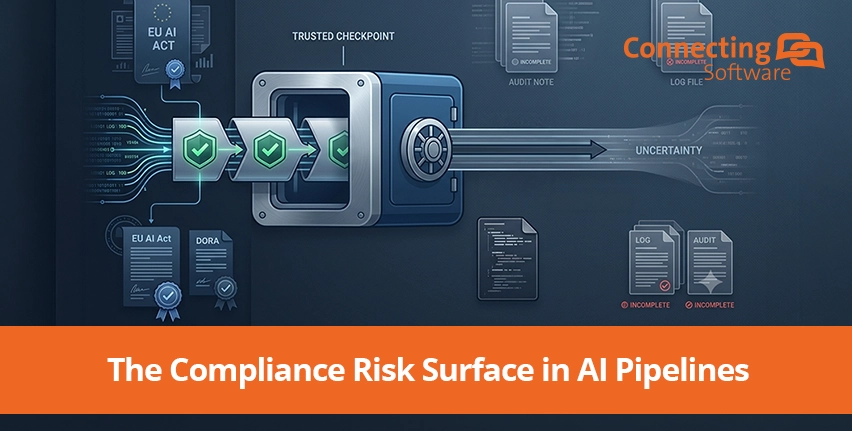
In dem Moment, in dem eine Datei bearbeitet, genehmigt und archiviert wird – genau dann gilt sie als endgültig, und der Datensatz wird vertrauenswürdig. Doch eine KI-Pipeline hört nicht auf, Dateien zu bearbeiten, sobald diese archiviert sind. Bei Nachtrainingsaufgaben werden alte Datensätze erneut eingelesen. Mitarbeiter verarbeiten "endgültige" Ergebnisse erneut. Anbietersysteme bearbeiten Datensätze, die eigentlich abgeschlossen sein sollten, noch einmal. Nichts davon ist böswillig beabsichtigt, aber nichts davon ist auch sichtbar – und genau das ist das Problem. Wenn sich eine Datei nach dem Zeitpunkt ändert, zu dem alle vereinbart hatten, ihr zu vertrauen, und nichts hat diesen Moment des Vertrauens so festgehalten, dass sich später nachweisen ließe, dass daran manipuliert wurde, Sie können unmöglich wissen, ob das, worauf Sie sich heute verlassen, auch das ist, was genehmigt wurde.
Hier geht es nicht um Prävention. Man kann und sollte nicht versuchen, jede Datei so zu sperren, dass sie nie wieder verändert werden kann. Es handelt sich um ein Erkennungsproblem: Änderungen nach dem Zeitpunkt der Vertrauenswürdigkeit müssen nachweisbar sein und dürfen nicht nur angenommen werden – und die meisten Compliance-Programme verfügen überhaupt nicht über einen entsprechenden Mechanismus. Wenn sich Ihr Prüfpfad ausschließlich auf Protokolle stützt, wird in den nächsten beiden Abschnitten erläutert, warum dies nicht so funktionieren wird, wie Sie es sich vorstellen.
Die Fläche, die niemand kartografiert hat
KI-Pipelines sind keine einzelnen Systeme – sie sind Ketten. Daten werden eingelesen, bereinigt, dienen zum Trainieren eines Modells, werden anhand von Testdatensätzen validiert, in die Produktion übernommen und fließen schließlich in einen Wiedertrainierungszyklus ein, der den Kreislauf von Neuem beginnt. Jeder Übergabepunkt in dieser Kette ist ein Punkt, an dem sich der Zustand einer Datei ändern kann, ohne dass dies von jemandem offiziell vermerkt wird.
Die Bedrohungslage laut ENISA für das Jahr 2025, basierend auf 4.875 zwischen Juli 2024 und Juni 2025 analysierten Vorfällen, ergab, dass Angreifer zunehmend Modelle für maschinelles Lernen manipulierten, mit Trojanern verseuchte Pakete veröffentlichten und Konfigurationsdateien manipulierten, die von Programmierassistenten verwendet werden – was bedeutet, dass tDie Pipeline selbst – und nicht nur die Ausgabe des Modells – ist nun ein aktives Ziel.. Das Ausmaß des Risikos nimmt immer weiter zu. Gartners Prognosen für Daten und Analytik für das Jahr 2025 Die Studie ergab, dass bis 2027 60% der Führungskräfte im Bereich Daten und Analytik mit schwerwiegenden Problemen beim Management synthetischer Daten konfrontiert sein werden, was die KI-Governance, die Modellgenauigkeit und die Compliance gefährdet, und identifizierte das Metadatenmanagement als unverzichtbar für die verantwortungsvolle Nachverfolgung, Überprüfung und Verwaltung synthetischer Daten.
Mehr Daten, mehr Modellversionen, mehr synthetische Inhalte, die durch immer mehr Übergabeschritte fließen – die zunehmende Verbreitung ist kein Risiko der Zukunft. Sie ist die aktuelle Ausgangslage, und Die meisten Pipelines wurden nie gebaut, um zu beweisen, was sich nicht geändert hat.
Die Messlatte für die Einhaltung gesetzlicher Vorschriften wurde gerade höher gelegt
Dies ist nicht mehr nur ein betriebliches Problem – es ist ein regulatorisches. Das Bestimmungen zur Datenverwaltung im EU-KI-Gesetz Organisationen ausdrücklich die Möglichkeit geben, Trainingsdatensätze unter Berücksichtigung von Faktoren wie Datenerfassungsprozessen, Datenaufbereitung, potenziellen Verzerrungen und Datenlücken zu verwalten, und Erwägungsgrund 67 bestätigt, dass diese Anforderung durch Dritte erfüllt werden kann, die zertifizierte Compliance-Dienstleistungen anbieten, darunter Überprüfung der Datenverwaltung, der Integrität der Datensätze sowie der Verfahren zur Datenaufbereitung, -validierung und -prüfung. Erwägungsgrund 133 geht noch einen Schritt weiter und nennt den konkreten Mechanismus, den die Regulierungsbehörden erwarten: Die Anbieter sollten Kryptografische Verfahren zum Nachweis der Herkunft und Echtheit von Inhalten, neben Wasserzeichen, der Identifizierung von Metadaten und Protokollierungsmethoden. DORA verschärft dies speziell für Finanzinstitute – Die französische AMF bestätigt, dass die betroffenen Unternehmen eine Richtlinie zur Informationssicherheit einhalten müssen, um die Verfügbarkeit, Authentizität, Integrität und Vertraulichkeit der Daten zu gewährleisten, die regelmäßig intern geprüft werden.
Ein geschäftsführender Gesellschafter einer Anwaltskanzlei hat in Bezug auf genau dieses Thema den Wandel treffend beschrieben: Die Frage, die die Aufsichtsbehörden stellen, lautet nicht mehr "Hatten Sie Kontrollmechanismen?", sondern ob eine Kanzlei "kann mit beweiskräftiger Aussagekraft rekonstruieren, was das System wann und warum getan hat" – und zwar wiederholt unter realen Stresstests. Genau diese Unterscheidung ist das eigentliche Problem. Ein Protokoll zeigt an, dass ein Ereignis stattgefunden hat. Es beweist jedoch für sich genommen nicht, dass der Datensatz dieses Ereignisses – oder die zugrunde liegende Datei – seitdem nicht verändert wurde. Ein in einer beschreibbaren Datenbank gespeicherter Datensatz ist nicht manipulationssicher, unabhängig davon, wer Zugriff darauf hat, und Eine Manipulationssicherung erfordert einen Mechanismus - kryptografische Verkettung, einmal beschreibbare Speichermedien oder gleichwertige Verfahren –, die Änderungen nachweisbar machen. Die Aufsichtsbehörden betrachten gemäß derselben Analyse das Fehlen eines Manipulationsschutzes als Lücke im Prüfpfad selbst. "Wir haben Protokolle" ist nicht dasselbe wie die Behauptung "Wir können nicht beweisen, dass sich nichts geändert hat"," Und im Rahmen von DORA und dem KI-Gesetz ist genau das die Lücke, die bei einer aufsichtsrechtlichen Überprüfung oder einem strittigen Vorfall auf die Probe gestellt wird.
So sieht nachweisbare Integrität aus
Die Lösung besteht nicht darin, jede Datei dauerhaft vor Änderungen zu schützen – das ist in einem System, das ständig dazulernen soll, weder realistisch noch wünschenswert. Die Lösung besteht vielmehr darin, jede Änderung nach einem festgelegten Zeitpunkt nachweisbar zu machen, und zwar unabhängig und ohne den zugrunde liegenden Inhalt offenzulegen. Das bedeutet, dass bei der Freigabe einer Datei ein kryptografischer Fingerabdruck erstellt wird, dieser Fingerabdruck extern verankert wird, damit die Datei nicht unbemerkt überschrieben werden kann, und die Datei später anhand dieses Fingerabdrucks erneut überprüft wird, um zu bestätigen – oder zu widerlegen –, dass sie unverändert ist.
Die an den NIST-Richtlinien ausgerichteten Leitlinien zur Absicherung von KI-Trainingspipelines empfehlen genau dieses Vorgehen: Wenn vorgefertigte Trainingsdatensätze verwendet werden, sollten nach Möglichkeit signierte Daten verwendet werden, um ihre Integrität und Herkunft sicherstellen können kryptografisch zurückverfolgt werden, wobei derselbe Ansatz auch auf Auswertungsdaten ausgeweitet wird.
Aktuelle wissenschaftliche Arbeiten legen formal fest, was dafür gewährleistet sein muss: Kryptografische Beweisstrukturen für regulierte KI-Arbeitsabläufe müssen Nachweise für Verbindlichkeit, Manipulationserkennung und Eindeutigkeit liefern, die unter standardmäßigen kryptografischen Annahmen und nicht anhand von Ad-hoc-Protokollierungskonventionen belegt sind – und dieselbe Forschung zeigt, dass dies mit geringem und vorhersehbarem Overhead pro Ereignis auf handelsüblicher Hardware erreichbar ist, Somit muss Sicherheit nicht auf Kosten der Leistung gehen..
Dies ist der eigentliche Test zur Nachweisbarkeit, und genau diesen Test besteht Ihre derzeitige Architektur entweder oder eben nicht: Wenn eine Aufsichtsbehörde, ein Wirtschaftsprüfer oder ein gegnerischer Anwalt fragt, woher Sie wissen, dass eine Datei nach dem von Ihnen angegebenen Datum nicht verändert wurde, können Sie dann mit einem unabhängig überprüfbaren Nachweis antworten – oder nur mit Ihren eigenen Protokollen, die Gartners eigene Untersuchungen zum Thema Governance Dies deutet darauf hin, dass die meisten Organisationen noch nicht in der Lage sind, die von den Aufsichtsbehörden erwarteten Anforderungen umzusetzen, da nur sehr wenige Unternehmen ihre KI-Governance-Rahmenwerke erfolgreich über die Phase der Richtlinienerstellung hinaus in die Praxis umgesetzt haben.
„Versiegelt und überprüfbar“ ist besser als „protokolliert und vertrauenswürdig“ – das zeigt sich bei jedem Test. Wenn Sie derzeit nicht nachweisen können, dass sich Ihre Unterlagen nach der Zulassung nicht geändert haben, sollten Sie diese Lücke schließen, bevor eine Aufsichtsbehörde sie für Sie entdeckt.
.
Probieren Sie es kostenlos aus – ganz unverbindlich:
Wahrheitsüberprüfer für IP-Schöpfer: https://truth-verifier.com/landing
Wahrheitsüberprüfer für Journalisten: https://truthverifier.news/landing
Kontaktieren Sie uns für eine kostenlose Analyse und Beratung: https://www.connecting-software.com/truth-enforcer-sign-up/


Durch Francisco Rodrigues, Produktmanager
"Ich schreibe darüber, wie sich Software-Integrationen an Geschäftsumgebungen anpassen und auf branchenspezifische Anforderungen reagieren können. Ich möchte Unternehmen den Weg zeigen, wie sie Prozesse rationalisieren, Engpässe beseitigen und die Einhaltung von Vorschriften sicherstellen können, indem sie Teams und Führungskräfte mit den richtigen Tools ausstatten."
Verwandte Lektüre
Warum die elektronische Rechnungsstellung in der EU eine Ebene zur Gewährleistung der Integrität der Nachweise erfordert
So sichern Sie digitale Beweismittel: Nachweis von Integrität, Herkunft und Beweiskette
Wenn Identitätsentscheidungen nicht nachgewiesen werden können, werden Genehmigungen zu Haftungsrisiken